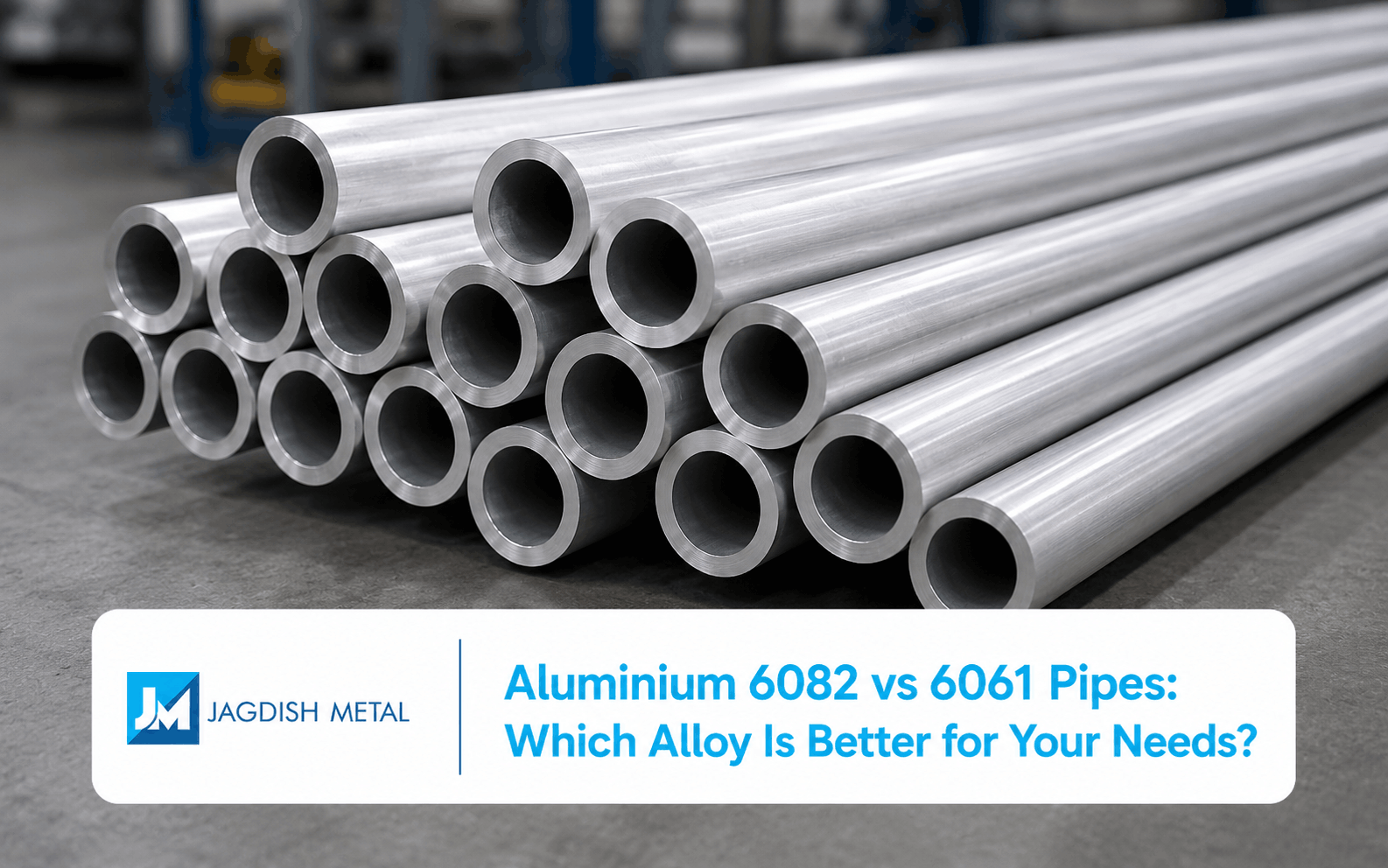
Selecting the wrong aluminium grade for a piping project carries real consequences: weld cracking, premature corrosion, or a structure that cannot carry its intended load. Aluminium 6082 and 6061 account for most of this confusion among engineers, since both belong to the 6xxx series and appear similar on a specification sheet, yet they perform differently once installed in coastal humidity, structural frames, or automotive chassis lines.
Jagdish Metal, an ISO 9001:2008 and OHSAS 18001:2007 certified supplier based in Mumbai, stocks both grades for construction, marine, and automotive sectors. The sections below outline what separates the two alloys and where each one delivers the strongest results.
Understanding Aluminium 6082 and 6061
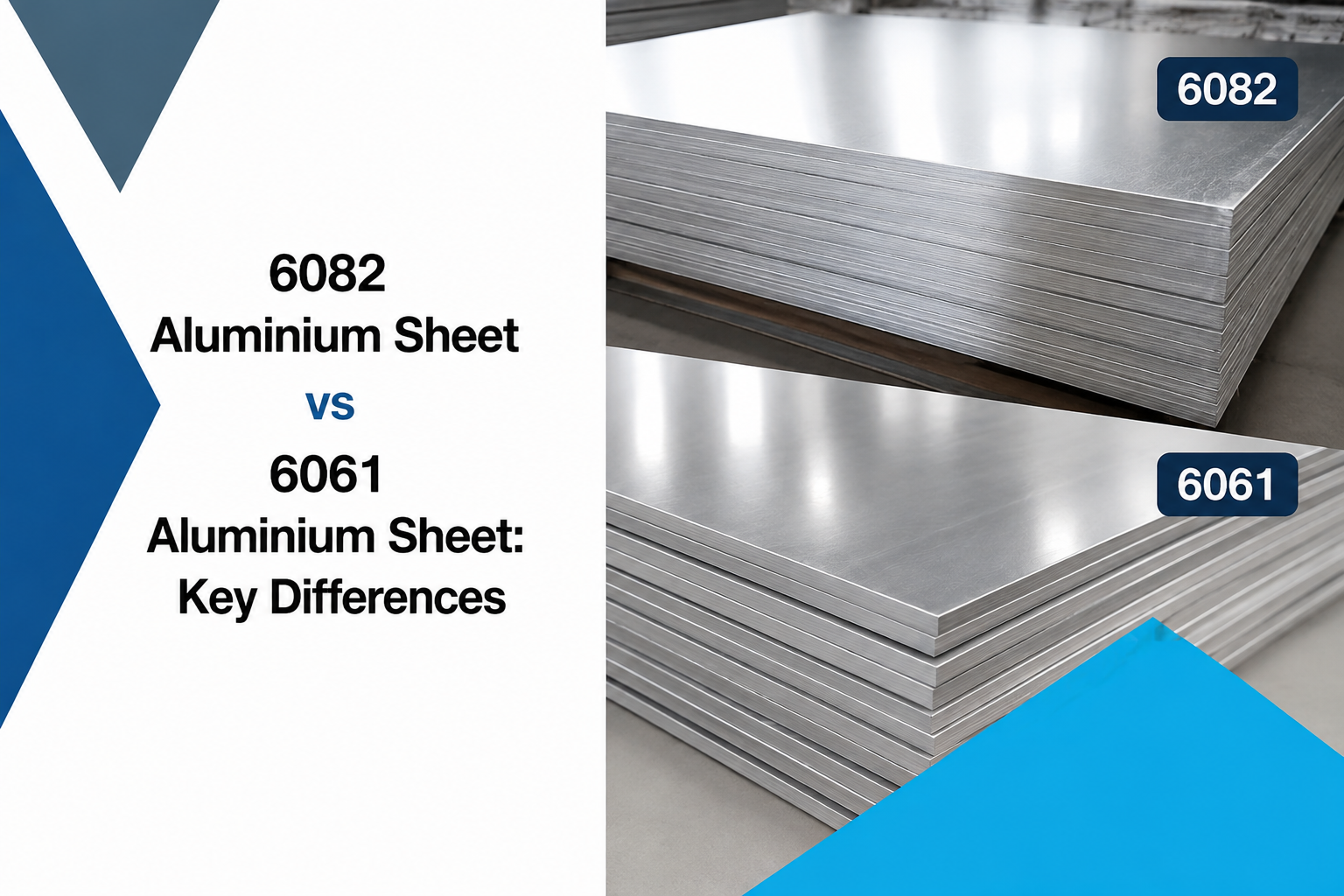
Manganese content sets the two alloys apart. Aluminium 6082 carries a higher proportion of manganese than most 6xxx grades, refining the grain structure and lifting tensile strength above 6061 in comparable tempers. Aluminium 6061 takes a different composition route: magnesium, silicon, and a small copper addition combine into one of the most widely produced aluminium alloys in industrial use.
Both alloys reach the market as extruded pipes, tubes, bars, and structural sections. Jagdish Metal maintains stock of each grade in standard pipe dimensions, ready for cutting, polishing, or electroplating before dispatch.
Key Properties of Aluminium 6082 Pipes
Tensile strength in 6082 pipes reaches 290 MPa in the T6 condition, a level that holds under sustained structural load without creeping over time. Corrosion resistance remains strong in marine and industrial atmospheres, resisting pitting even after extended moisture exposure, and weld joints retain a high proportion of base metal strength once a fabricator carries out heat treatment correctly.
Bridges, cranes, and transport frames specify 6082 for this combination of properties, since the alloy carries structural load without adding excess bulk. Shipbuilding frames and offshore platforms apply the same logic where saltwater exposure meets sustained mechanical stress.
Key Properties of Aluminium 6061 Pipes
The tensile strength of the 6082 pipes is 290 MPa in the T6 condition and does not creep with time under long-term structural loading. The corrosion resistance is high in marine and industrial atmospheres and pitting resistance is maintained even after long-term exposure to moisture. The weld joints maintain a high proportion of base metal strength, as long as a fabricator correctly performs heat treatment.
Forming and bending proceed faster with 6061 than with 6082, since the alloy requires fewer tool changes during machining. Standard atmospheric and freshwater exposure present no issue, though aggressive marine conditions favour 6082 instead, and aerospace component manufacturers and automotive fabricators across India specify 6061 for this combination of light weight and workability.
Major Differences Between the Two Alloys
Manganese content drives the chemical distinction: 6082 carries more of it, refining grain structure and adding strength beyond what 6061 achieves. Mechanical strength comparisons in the T6 condition favour 6082 in most cases, and corrosion resistance in saltwater environments tips the same way, while 6061 performs reliably under standard atmospheric exposure. Weldability remains close between the two grades, though 6061 machines are somewhat faster, since its lower hardness requires fewer passes at the tool. Global production volume runs higher for 6061, though Jagdish Metal maintains stock of both grades for immediate dispatch.
Which Alloy Performs Better in Industrial Applications?
Construction projects favour 6082 wherever load-bearing capacity takes priority over weight reduction, and offshore platforms and marine frames follow the same reasoning given constant exposure to saltwater. Automotive chassis components move in the opposite direction, since 6061 reduces weight and that translates directly into improved fuel efficiency. Aerospace applications divide between the two grades depending on the component: general airframe parts use 6061 in most cases, while components where structural load takes priority shift toward 6082. General engineering and fabrication work defaults to 6061 in most cases, since its machinability reduces production time without compromising strength on non-critical parts.
Advantages of Choosing Aluminium 6082 Pipes
A superior strength-to-weight ratio places 6082 ahead in load-bearing structural designs, allowing heavier installations to run on smaller pipe diameters than 6061 would permit for the same load capacity. Service life extends in demanding environments where corrosion and mechanical stress combine, and crane booms and structural frames in heavy engineering applications benefit most directly from these characteristics.
Advantages of Choosing Aluminium 6061 Pipes
Machining time decreases noticeably with 6061, a factor that matters on projects operating under tight schedules, and material cost stays lower as well, since the added strength of 6082 offers no functional benefit on general-purpose work. Automotive, aerospace, and general engineering projects all draw on the same versatility, and lighter structures gain measurable efficiency from the alloy’s lower density relative to its strength.
Factors to Consider Before Choosing Between 6082 and 6061 Pipes
Application requirements should guide the decision first, since a structural beam and a fluid transport line demand different properties from the same pipe. Environmental exposure narrows the choice further: saltwater or chemical contact favours 6082, while standard indoor or atmospheric conditions rarely require anything beyond 6061. Budget considerations affect the outcome as well, since higher production volume keeps 6061 priced below 6082 in most standard pipe sizes. Sustained structural load favours 6082, while welding work involving multiple passes proceeds more smoothly with the forgiving machinability of 6061.
Common Industries That Use These Aluminium Pipes
Pressure and corrosion exposure at the installation site determine which grade oil and gas operations select. Chemical processing plants specify 6082 wherever aggressive media meet structural piping, while automotive manufacturing relies largely on 6061 for chassis and fluid-line components. Aerospace manufacturers divide usage by component function, marine projects favour 6082 for hull supports and deck structures, and construction work draws on both grades, with 6082 covering load-bearing frames and 6061 covering general fabrication.
Tips for Selecting the Right Aluminium Pipe Supplier
Material certification confirms that the alloy grade and mechanical properties match the project specification. Jagdish Metal supports every batch with third-party inspection through agencies including Metallurgical & Engineering Consultants (India) Ltd, giving buyers verified test data ahead of delivery, and this level of quality control reduces the risk of material failure further down the project timeline.
Customisation capability speeds up the next stage of a project, with cutting, electroplating, and polishing all available in-house to save time on schedules with little margin for delay. Technical support from a team with practical fabrication experience helps confirm the correct grade before a buyer places the order.
Conclusion
Aluminium 6082 delivers higher load-bearing strength and stronger saltwater corrosion resistance, making it the preferred choice for demanding structural and marine environments. Aluminium 6061 offers easier machining, lower weight, and broader versatility across automotive, aerospace, and general engineering work. Neither alloy outperforms the other across every application; the right choice depends on load requirements, environmental exposure, and budget for the specific project at hand.
Jagdish Metal supplies both 6082 and 6061 aluminium pipes from its Mumbai facility, backed by certified quality control and third-party inspection. Contact Jagdish Metal to confirm the right grade and dimensions for your next project.